(If you have any comments or questions, please contact the editor)
Stories
E-Bulletin forJune 3, 2019 (Issue 255)
The Most beautiful thing we can experience is the mysterious. It is the source of all true art and science. He to whom this emotion is a stranger, who can no longer pause to wonder and stand rapt in awe, is as good as dead: his eyes are closed. (Albert Einstein)
Attendance on May 30, 2019
Doug Balkman, Chester Banks, Del Brown, Frederick Case, Randy Cook, Pam Cook, Gary Nelson, Charles Walts, Kelli Whigham, Rhonda White Ted Breihan, Andrew Gary, John Polk, Glen Rydl, Gary Strunk, Ronda Young, Tim Tibbett (17) Guests: Kelly Layne
"Here is the list of Greeters for the month of June 2019
……….June 6, 2019...……...Del Brown
……….June 13, 2019...…….Tim Tippett
……….June 20, 2019...…….John Roppolo
……….June 27, 2019...…….Rhonda White
The lucky winner of Big Bucks last week was Ronda Young, and she kept it.
2009 Scholarship Recipients (continued)
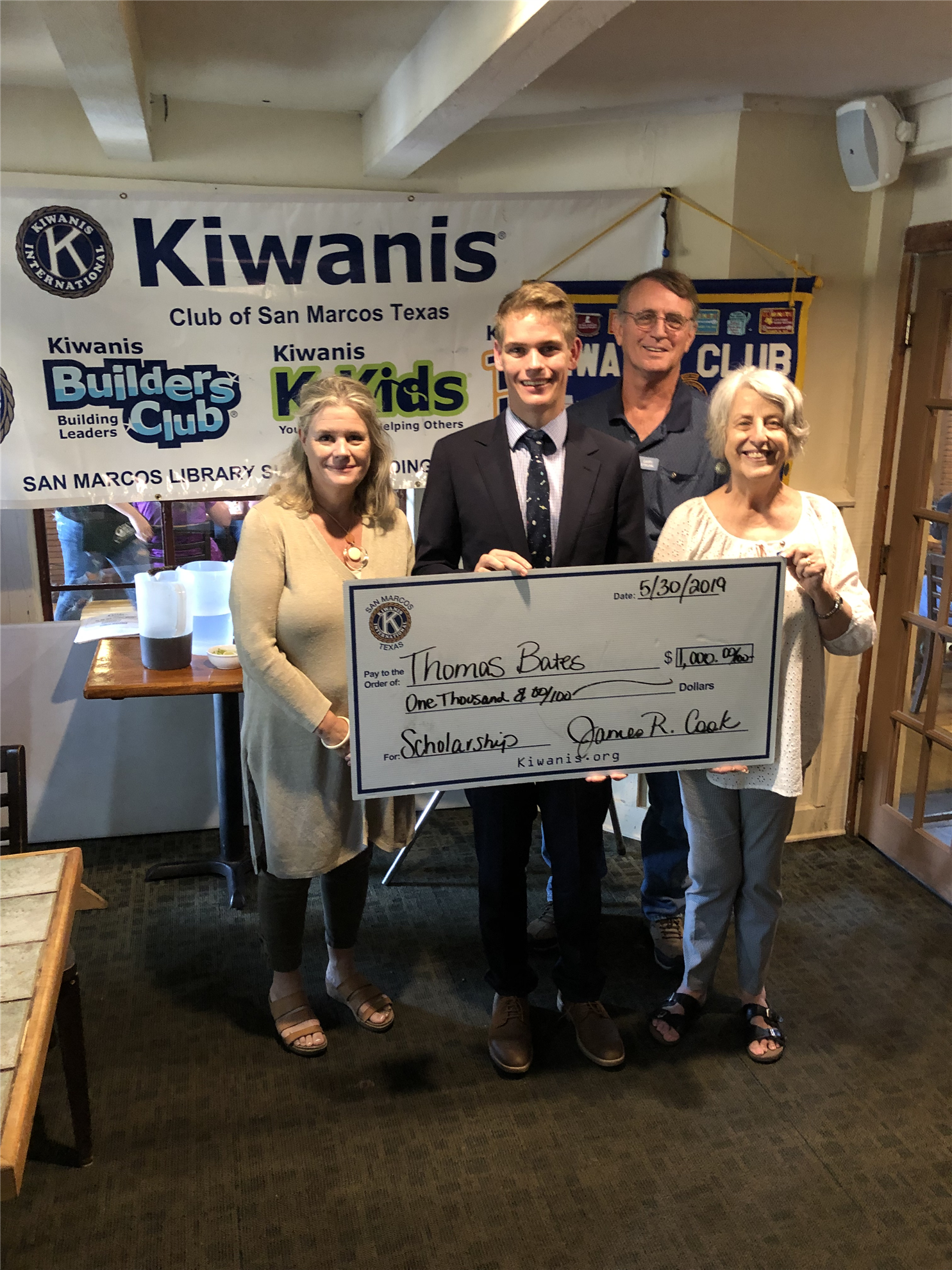
Our two recipients who received each a $1000 scholarship are pictured here. On the left is Ariella Ruiz, and to the right is Thomas Bates. Congratulations to you both. These two (who were absent last week) join our other three recipients: Sarah Steen, Madison Mendez and Daisy Obrigon. Congratulations to all five of you and God Bless you in your future endeavors.
Anniversaries celebrated in May!
…….June 7...…..John & Mary Polk
…….June 30......Del & Marie Brown
Happy Birthday to You in the Month of June!
………...June 28...……...Veronique Hahn
………….June 30...……...Francis Mendez
1. John & Mary Polk
2. Ted & Francis Breihan
3. McBride & Elsie McBride
(If you hear of any of our members who are sick or disabled, and you would like their names put into the bulletin, please let your editor know.
The Program for this coming Thursday,
Glen Rydl will be bringing Susan Smith from the San Marcos Public Library. She will bring us all up to date on the various children's programs that are occurring at the Library. Remember that the funds we receive from our Flag program goes to Susan and her Children's Summer Reading Program. There is always something different going on at the library, so let's have a good turnout for this coming Thursday.
From May 31st to June 6th
May 31, 1889 - - Over 2300 persons were killed in the Johnston flood in Pennsylvania. Heavy rains throughout May caused the Connemaugh River Dam to burst sending a wall of water 75 feet high pouring down upon the city.
June 1, 1801 - - Founder of Utah and patriarch of the Mormon church Brigham Young was born in Whittingham, Vermont. Called the 'American Moses', he led thousands of religious followers across the wilderness to settle over 300 towns in the West, including Salt Lake City.
June 2, 1740 - - Marguis de Sade was born in Paris. He was a military leader, governor-general, and author, whose acts of extreme cruelty and violence resulted in the term sadism being created from his name to describe gratification in inflicting pain.
June 3, 1972 - - Sally Jan Priesand was ordained a rabbi thus becoming the first woman rabbi in the United States. She then became an assistant rabbi at the Stephen Wise Free Synagogue in New York City.
June 4, 1944 - - During World War Ii in Europe, Rome was liberated by the U.S. 5th Army, led by General Mark Clark. Rome had been declared an open city by German Field Marshal Albert Kesselring amid Allied concerns the Germans might stage a Stalingrad-style defense that would devastate the historic 'Eternal' city.
June 5, 1783 - - The first sustained flight occurred as a hot-air balloon was launched at Annonay, France, by brothers Joseph and Jacques Montgolfier. Their 33-foot-diameter globe acrostatique ascended about 6,000 feet. In September, they repeated the experiment for King Louis XCI, using a sheep, rooster and duck as the balloon's passenger.
June 6, 1944 - - D-Day, the largest amphibious landing in history, began in the early-morning hours as Allied forces landed in Normandy on the northern coast of France. Operation Overlord took months of planning and involved 1,527,000 soldiers in 47 Allied divisions along with 4,400 ships and landing craft, and 11,000 aircraft. The Germans had about 60 divisions spread along France and the Low Countries. American forces landed on two western beaches, Utah and Omaha, while British and Canadian troops landed farther east on Gold, Juno and Sword beaches. By the end of the day 150,000 Allied soldiers and their accompanying vehicles had landed with 15,000 killed and wounded.
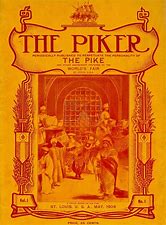
Have You Ever Heard the Phrase, "TO BE A PIKER?"
"To be a cheap-skate, tin horn gambler, four-flusher, etc; to be a poor sport or small better. Although this American term is less than a hundred years old, its origin is shrouded in uncertainty. It could have been derived from a regiment, commanded by Colonel Zebulon M. Pike in the war of 1812, so poorly armed that many of the men drilled with pikes instead of bayonets. Or it could have derived from the denizens of Pike County, Missouri (also named from Z.M. Pike). who, among the Forty-Niners of California were called Pikes, Pikies, or pikers, any of which designated worthless, lazy, good-for-nothing persons. It might even have derived from a vagrant or tramp who, lacking means for other transportation, traveled on shank's mare - - afoot, that is - - down the pike; a foot traveler on the pike."
Net Worth
"Man Shopper: I want some invisible hair nets for my wife."
Clerk: 'Here you are, Sir. That will be 25 cents.'
Man Shopper: 'Are you sure they are invisible?'
Clerk: 'Invisible! Why, I've been selling them all morning, and we've been out of stock for two weeks.'"
History of the Montana State Flag
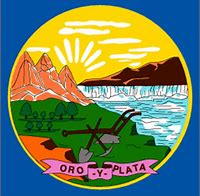
Montana's official flag was adopted in 1905. The flag has a deep blue field with "Montana" written in yellow, with the state seal below. The seal pictures a beautiful Montana landscape; the Rocky Mountains, cliffs, a waterfall, and river beneath a golden sky with white clouds and white sun rays. A plow represents agriculture, a pick and shovel represent mining. A ribbon below the scene states Montana's motto, 'Oro y plata' meaning 'Gold and Silver' in Spanish."
How About Some More Exponderables!
1...…..A stitch in time saves nine what?
2...…..Day light savings time - why are they saving it and where do they keep it?
3...…..Did Noah keep his bees in archives?
4...…..Do blind dogs have seeing-eye humans?
5...…..Do blind Eskimos have seeing-eye sled dogs?
6...…..What does Geronimo say when he jumps out of a plane?
7...…..What happens if you go on a survival course - and you don't pass?
8...…...Do files get embarrassed when they get unzipped?
9...…...Do jellyfish get gas from eating jelly beans?
10...…..What happens when you swallow your pride?
See if you remember these facts: Curveball!
"The baseball pitch known as a curve does not really curve sideways as most people think it does. The direction in which the ball moves is essentially downward. A curveball should actually be called a dropball. In fact, during baseball's early days, the curve was actually called the 'out drop' pitch. If correctly thrown, the hand will snap the ball over the index finger as it is released. The ball spins from top to bottom, aero-dynamically causing it to curve downward. In fact, if a pitcher were theoretically suspended in midair and properly threw a curve with sufficient velocity, the ball would follow a circular path around and below the pitcher finally hitting him in the back of the head.
Some pitches do curve sideways. However these are sliders, roundhouses, or improperly thrown curveballs



 The Most beautiful thing we can experience is the mysterious. It is the source of all true art and science. He to whom this emotion is a stranger, who can no longer pause to wonder and stand rapt in awe, is as good as dead: his eyes are closed.
.jpg) "
".jpg)
 The lucky winner of Big Bucks last week was Ronda Young, and she kept it.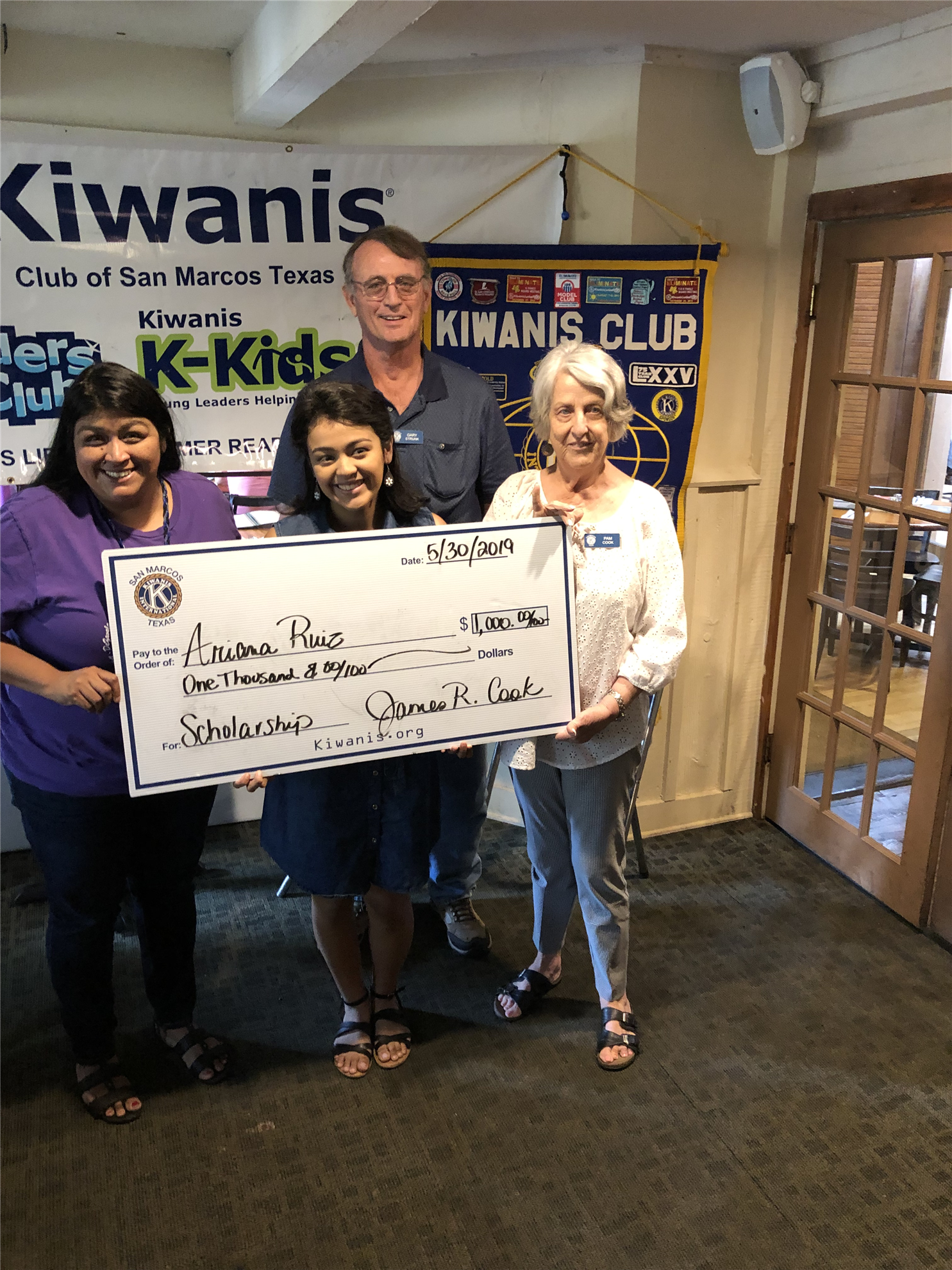


 1. John & Mary Polk
 Net Worth