"There is great comfort and inspiration in the feeling of close human relationships and its bearing on our mutual fortunes - a powerful force, to overcome the 'tough breaks' which are certain to come to most of us from time to time." (Walt Disney"
Attendance at our Meeting on January 2, 2020
Doug Balkman, Jeanne Balkman, Del Brown, Frederick Case, Randy Cook, Pam Cook, Charles Johnson, Moe Johnson, Lon Shell, Charles Walts, Kelli Whigham, Rhonda White, Ted Breihan,, Andrew Gary, (13)...(Guest: Steevie White (Rhonda's Grandchild)
What a Fantastic Christmas Party Our Club had on December 11th.
We had 23 members and their significant others attend our Christmas Outing . It was wonderful! Grist Mill was an excellent place to meet, and th e food was excellent. Those who attendecd were: Rhonda & Darrel White; Kelli & Steve Whigham; Pam & Randy Cook; John Roppolo; Chester Banks, Charles & Linda Johnson, Del & Marie Brown, Doug & Jeanne Balkman, Garry White, Charles & Cherry Walts, Moe & Dianne Johnson, Lon & Phyllis Shell, Ronda Young.
Our Program for this coming Thursday, December 19th will be brought by Francis Mendez.
Birthdays during the Month of January 2020
...........Gary Nelson,,.....January 18
...........Randy Cook........January 24
""Did You Know........?
1...Human thigh bones are stronger than concrete!
2...Scientists have tracked butterflies that travel over 3,000 miles!
3....To produce a single pound of honey, a single bee would have to visit 2 million flowers.!
4....You breathe on average about 8,409,600 times a year.
5....Hamsters run up to 8 miles at night on a wheel.
6....Under the Code of Hammurabi, bartenders who watered down beer were punished by execution.
7....Our eyes are always the same size from birth, but our nose and ears never stop growing.
8....The bloodhound is the only animal whose evidence is admissible in court.
9....The elephant is the only mammal that can't jump.
10...You are 1% shorter in the evening than in the morning.
History Facts from January 10 to January 16
January 10, 1776 - - "Common Sense, a fifty page pamhlet by Thomas Paine, was published. It sold over 500,000 copies in America and Europe, influencing, among others, the authors of the Declaration of Independence.
January 11, 1861 - - Alabama seceded from the Union in events leading to up the American Civil War.
January 12, 1996 - - Congress authorized President George Bush to use military force against Iraq following its invasion of Kuwait.
January 13, 1935 - - The population of he Saar region bordering France and Germany voted for incorporation into Hitler's Reich. The 737 square mile area with its valuable coal deposits had been under French control following Germany's defeat in World War I.
January 14-23, 1943 - - President Franklin Roosevelt and British Prime Minister Winston Churchill met at Casablanca in Morocco to work on strategy during World War II. At the conclusion of the conference, Roosevelt and Churchill held a joint news conference at which Roosevelt surprisingly announced that peace would come "by the total elimination of German and Japanese war power. That means the unconditional surrender of Germany, Italy and Japan."
January 15, 69 A.D. - Roman Emperor Sulpicius Galba was assassinated by the Praetorian guard in the Roman Forum. He had succeeded Emperor Nero.
January 16, 1992 - - The twelve year civil war in El Salvador ended with the signing of a peace treaty in Mexico City. The conflict had claimed over 75,000 lives.
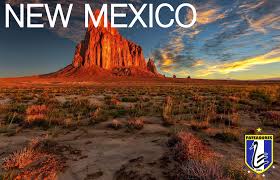
Where New Mexico got it's name!
"New Mexico got its name with the signing of the Treaty of Cordova on August 24, 1821. The Spanish-American colonies secured their independence from Spain, and New Mexico became a part of the Mexican Republic. The name may derive from the name of the Aztec god of war, Mixitli."
"Gas, Kansas"
"Gas was named in 1893 when drillers in search of natural gas struck it big. In the next few decades numerous companies moved in to exploit the resources, and the town became one of the biggest suppliers in the nation. Although the town ran out of gas in 1910, the name still lives on."
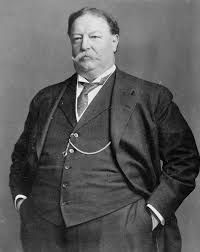
Know Your Presidents . .William Howard Taft.
" William Taft was the 27th President of the United States. He served from 1909 - 1913. William Taft was perhaps the heaviest President, 332 lbs. He was selected by President Teddy Roosevelt to be his successor. He is most famous for being the only president to serve on the Supreme Court after leaving office. His many accomplishments included a parcel post service; the sixteenth amendment creating a federal income tax was passed. The Department of Labor was created to help the average worker by insuring things like workplace safety, wage standards, work hours, and unemployment insurance. The states New Mexico and Arizona were added to the country making Taft the first president over the 48 contiquous states. Taft was commonly known as Big Bill because he was such a large and influential man."
"Jackson went to a psychiatrist, 'Doc,' he said, 'I've got trouble. Every time I get into bed I think there's somebody under it. I get under the bed, I think there's somebody on top of it Top, under, top, under. I'm going crazy!"
"Just put yourself in my hands for two years," said the shrink. 'Come to me three times a week, and I'll cure you.' 'How much do you charge?' 'A hundred dollars per visit.' 'I'll think about it.'
Jackson never went back. Six months later he met the doctor on the street. 'Why didn't you ever come to see me again?' asked the psychiatrist..
'For a hundred bucks a visit? A bartender cured me for 10 dollars.' 'Is that so! How?' 'He told me to cut the legs off the bed.'"
"Why Do We say 'DIXIE?'"
"Dixie'" may be derived simply from the Mason-Dixon line (the boundry still sometimes used to distinguish the South from the North). But a more ingenious explanation traces it to dix, the French word for 'ten' Dix used to be displayed in large letters on a bilingual ten-dollar bill issued by a bank in New Orleans, and the bills gained the nickname dixies. Since having ten dollars in the South's most colorful city was a pleasant sensation, some Southerners saw Dixie as a positive name for the South. When Daniel Emmet's song 'Dixie' became popular in 1859, the term rapidly spread throughout the country.'"
Our National Anthem....Everytime I sing that beloved song, I get chills up and down my spine. But, "contrary to the role usually attributed to Francis Scott Key, he wrote only the words, but not the music. The tune that became our national anthem was actually a popular British and American drinking song to which Key later adapted his short poem.
Francis Scott Key, a lawyer and witness to the British bombardment of Fort McHenry the night of September 13-14, 1814, was so inspired by the sight of the American flag still flying over the fort that he wrote a one-stanza poem on the back of an envelope. He originally entitled it 'The Defense of Fort McHenry.' The following day, Key's brother-in-law, Judge J.H. Nicholson, suggested that the poem might go well with the popular tune 'Anacreon in Heaven.' Key adapted his poem to fit this song.
Although the origin of the song is not known for certain, it is believed to have been written by John Stafford Smith, a British composer, in 1780. Anacreon was a Greek poet who was revered as a bard of wine, love, song and revelry. Smith's tune was probably an English drinking ballad, and it became the official song of a London musical society during the 1780. By 1790 the tune had also become popular in American taverns.
Key later wrote several other stanzas and renamed the song, 'The Star-Spangled Banner.' It was used officially by the army and navy at certain ceremonial occasions in the late 1890s, and was popularly considered, although not officially, the national anthem for many years. Finally, 117 years after Key first wrote the words, Congress made it the official national anthem of the United States on March 3, 1931."(As a bit of sidenote, March 3, 1931 was the day and year that I was born)


 E-Bulletin for January 16, 2020 (


.jpg)
 .
.
 "
"
 William Howard Taft.
 Our National Anthem....Everytime I sing that beloved song, I get chills up and down my spine. But, "contrary to the role usually attributed to Francis Scott Key, he wrote only the words, but not the music. The tune that became our national anthem was actually a popular British and American drinking song to which Key later adapted his short poem.