(If you have any comments or questions, please contact the editor)
Stories
E-Bulletin for July 22. 2019(Issue 262)
"The three great ends which a statesman ought to propose to himself in the government of a nation are: (1) security to possessors, (3) facility to acquirers, and (3)hope to all"(Samuel Coleridge)
Attendance on June 18, 2019
Doug Balkman, Jeanne Balkman, Chester Banks, Del Brown, Frederick Case, Randy Cook, Pam Cook, Charles Johnson, Moe Johnson, Gary Nelson, Lon shell, Charles Walts, Kelli Whigham, Rhonda White, Ted Breihan, Beverly Crumley, Andrew gary, John Polk, Glen Rydl, Ronda Young, Tim Tippett, Kelly Layne (22)
(Guests) We had 5 visitors from New Braunfels Kiwanis Club; 1 visitor from the Salvation Army (newly elected president of the local organization)
"Here is the list of Greeters for the month of July 2019
July 25...…………Francis Mendez
New member joins our Club
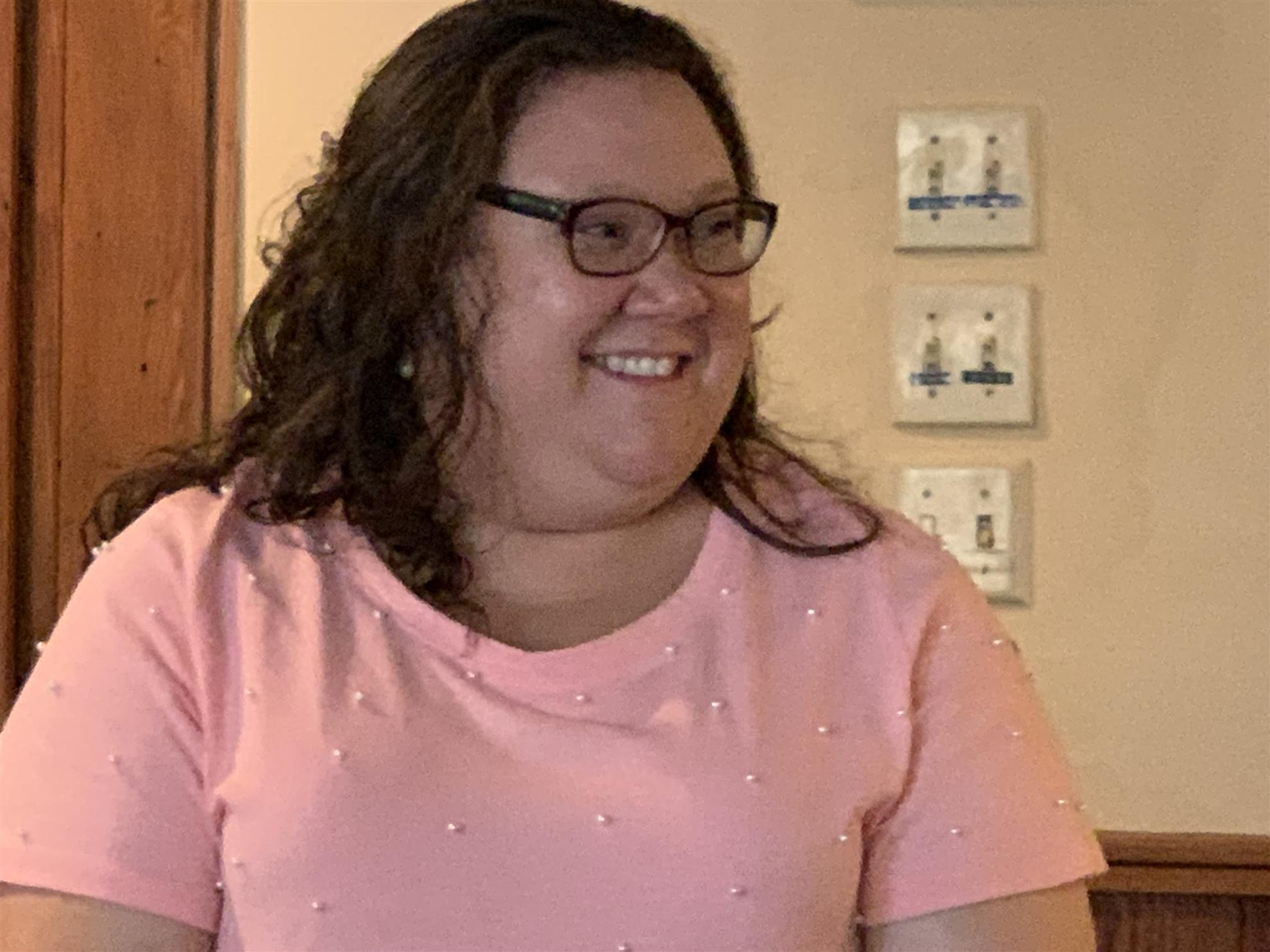
Last Thursday, July 18, a new member was formerly inducted into our club. Her name is Kelly Layne, and she has been attending our club for the last month or so. She has already gotten into the swing of things and will be a tremendous asset to our club. Pam Cook inducted her into the club and presented her with her pin. The club was very impressed with her background and took great delight in verbally, as our tradition so goes, to loudly welcome her in the club.
welcome Kelly!!
The Program coming up this coming Thursday, July 25th, 2019
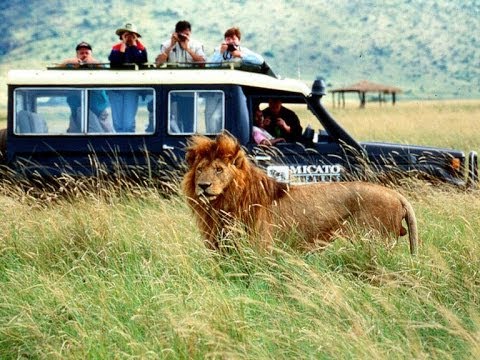
The program this coming week will be brought by Charles Johnson and he will be talking about his experiences while on an African Safari trip. As all of Charles's presentation, it will be full of personal experiences, so let's not miss it.
Board of Directors Meeting...
Just another reminder that our Board of Directors will beet this coming Thursday, July 25th at 5:00pm in room 305 on the third floor of the CTMC Professional Building. See you all there!
From July 19th to July 25th
July 19-20, 1848 - - A women's rights convention was held at Seneca Falls, New York. Topics discussed included voting rights, property rights and divorce. The convention marked the beginning of an organized women's rights movement in the U.S.
July 20, 1954 - - An agreement was signed in Geneva, Switzerland, ending hostilities between French forces in Vietnam and the People's Army of Vietnam.
July 21, 1898 - - Guam was ceded to the United States by Spain.
July 22, 1934 - - Bank robber John Dillinger was shot and killed by FBI agents as he left Chicago's Biograph Movie Theater after watching the film Manhattan Melodrama starring Clark Gable and Myrna Loy.
July 23, 1952 - - Egyptian army officers launched a revolution changing Egypt from a monarchy to a republic.
July 24,1945 - - At the conclusion of the Potsdam Conference in Germany, Winston Churchill, Harry Truman and China's representatives issued a demand for unconditional Japanese surrender. The Japanese, unaware the demand was backed up by an Atomic bomb, rejected the Potsdam Declaration on July 26.
July 25, 1898 - - During the Spanish American War, the U.S. invaded Puerto Rico, which was then a Spanish colony. In 1917, Puerto Ricans became American citizens and Puerto Rico became an unincorporated territory of the U.S. Partial self-government was granted in 1947, allowing citizens to elect their own governor. In 1951, Puerto Ricans wrote their own constitution and elected a non-voting commissioner to represent them in Washington.
Have You Ever Heard the Phrase, "I Declare to Betsy!"
"An ejaculation expressing positive affirmation, surprise, close interest, or similar emotion; equivalent to 'Well, I do declare,' etc. I am afraid that this Betsy, as also she of 'Heavens to Betsy,' was a homeless waif of no particular parentage. Like Topsy, she just 'growed.' 'I declare to goodness,' the bald 'I declare,' and the slightly stronger 'Well, I declare date back perhaps two or more centuries in the usage of England. 'Declaring to goodness' savored too strongly of sacrilege to God fearing American ears, but the innocuous Betsy was at hand, ready and willing.'"
"Bad Axe, Michigan"
"This town got its name in 1861 when George Willis Pack and Rudolph Papst set out to lay a new state road from the shores of Lake Huron to Bay City. They would stop at each campsite on the way, survey the land for a few days, and choose a name for the area. They named this particular spot Bad Axe because when Papst was out searching for firewood he stumbled upon an old, beat-up axe left behind by past campers.
"What's this daily charge for 'fruit'? the hotel patron asked the manager. 'We didn't eat any.' 'Ah yes, but the fruit was placed in your room every day. It isn't our fault you didn't take advantage of it.'
'I see,' said the man as he subtracted $150 from the bill. 'What are you doing?' sputtered the manager.
'I'm subtracting 50 dollars a day for your kissing my wife.' WHAT!!! i DIDN'T KISS YOUR WIFE.'
'Ah,' replied the man, 'but she was there.'"
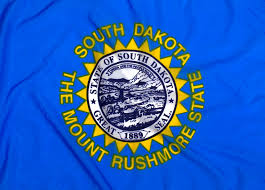
History of the South Dakota State Flag
South Dakota's official flag was adopted in 1963. The flag is sky blue with state seal in the center (surrounded by yellow rays are the words, 'South Dakota' and 'The Mount Rushmore State'). South Dakota's state seal pictures a farmer plowing a field, a river, forests, mountains, a steamboat, and the motto, 'Under God the People Rule.'
South Dakota's original flag (adopted in 1909) had an image of the sun on the front and the state's seal on the back. In 1963, the state's seal and the sun's rays were both placed on the front of the flag (with nothing on the back of the flag.) In 1992, the old motto, 'The Sunshine State,' was changed to 'The Mount Rushmore State' (this is because Florida is commonly known as the Sunshine State). The original flag's design was by Senator Ernest May and Doane Robinson, secretary of the State Historical Society. Will Robinson, Doane Robinson's son, redesigned the flag in 1963."
"Oh Well!!!!!
1...…….Who opened that first 'oyster' and said "My,my,my, Now does't this look yummy!
2.........How do you get off a nonstop flight?
3.........How do you know if honesty is the best policy unless you've tried some of the others?
4.........How do you know when you've fun out of invisible ink?
5.........If a pig loses its voice, is it disgruntled?
6.........How do you write zero in Roman numerals?
7.........How does a person with a lisp pronounce that word?
8.........How does a thermos know whether a drink should be hot or cold?
9.........How is it possible to have a 'civil' war?
10.........How is it possible to run out of space?
Here's Some more 'Myth Information"
...."The Liberty Bell was not cracked while ringing for independence on July 4, 1776. Much of the history of his famous symbol of American liberty is surrounded by folklore, but the crack did not appear until much later.
Commissioned to hang in the Pennsylvania State House, now named Independence Hall, the bell was first cast in London in 1752. After it was shipped to America, it cracked while being tested on the ground and was recast twice more in Philadelphia.
The bell was rung for special occasions, including the proclaiming of the Declaration of Independence. But it was not rung on the Fourth of July, since public celebrations for independence actually took place several days later. While tolling for the funeral of Chief Justice John Marshall in 1835, it suffered its now famous crack. This fracture became irreparable when further cracked while ringing for the last time in 1846 for George Washington's birthday.
Although originally inscribed with the words, 'Proclaim liberty throughout all the land unto all the inhabitants thereof,' the bell had little connection with liberty in people's minds until 1839. A pamphlet published during the antislavery movement titled The Liberty Bell popularized the bell as a symbol of liberty in America. Since then, a great deal of patriotic folklore has sprung uip surround the bell, much of it untrue." ("Myth Information" by J.Allen Varasdi)



.png)

.jpg) "
"



 "Oh Well!!!!!
 Here's Some more 'Myth Information"